SESAH Annual Conference 2025
Monument to a Workers’ Bureaucracy: Organizing, Administration, and Management in the AFL-CIO Headquarters, Washington, D.C.
Conference Presentation, September 2025
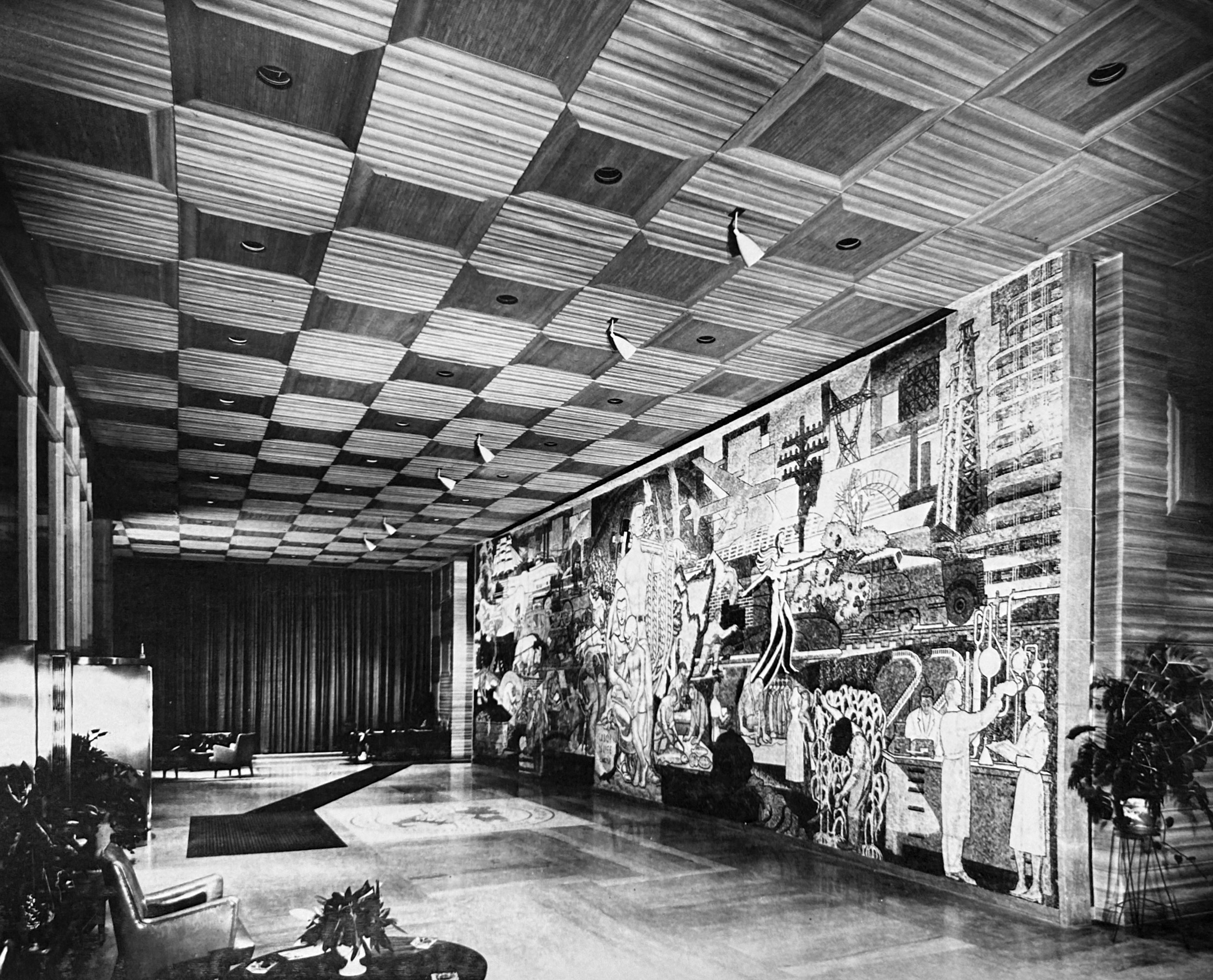
In 1941, political theorist James Burnham posited that a “Managerial Revolution” had taken place in the first half of the twentieth century, a rubric that is most often applied to understand the increasingly bureaucratic work of governmental agencies and private corporations. Architecturally, the consequences of this bureaucratization have been identified by scholars in the proliferation of planimetrically similar office buildings housing clerks and calculators. This type of architectural analysis has less often been undertaken for the buildings of trade unions, who similarly bureaucratized by the middle of the twentieth century in the U.S. as capital and labor reached a détente and organizers were tentatively permitted into the centers of U.S. power. Emblematic of this ascension is the headquarters of the American Federation of Labor – Congress of Industrial Organizations (AFL-CIO), just across Lafayette Square from the White House executive residence in Washington, D.C. Designed by Ralph Walker, an architect famous for the design of numerous skyscrapers in New York in the 1920s and 1930s, declared in 1957 by the New York Times to be “Architect of the Century.” Aesthetically, the design stakes out a middle ground between stone-faced skyscrapers and midcentury modern style glass office buildings that conveys a sense of permanence and solidity melded with progress and innovation. The building has yet to receive analytical attention for its organizational and programmatic character, asking not how it was similar to buildings housing federal agencies nearby, but how it was different, how its spaces accommodated the organizing purposes of a national federation of workers and legitimated the organization’s status as the voice of workers in Washington. Based on original archival research in the collections of the AFL-CIO and its long-term president George Meany at the University of Maryland, and of architect Ralph Walker at Syracuse University, this paper will explore the way that Walker not only afforded but also directed and channeled the increasingly bureaucratic priorities of this ostensibly worker-led institution.
Mosaic mural by Lumen Martin Winter in the lobby of architect Ralph Walker’s AFL-CIO Building, Washington, D.C., completed 1956 (Ralph T. Walker papers, Syracuse University Libraries)
Mosaic mural by Lumen Martin Winter in the lobby of architect Ralph Walker’s AFL-CIO Building, Washington, D.C., completed 1956 (Ralph T. Walker papers, Syracuse University Libraries)